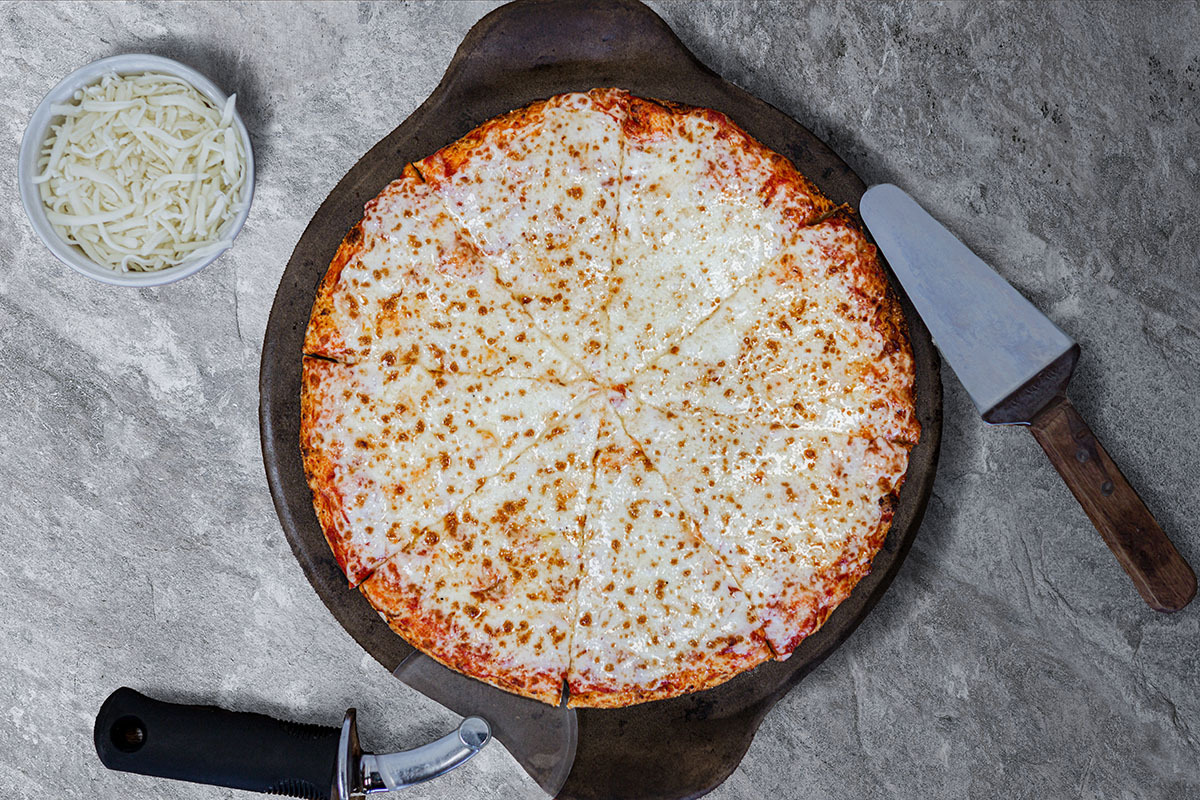
Not all pizza cheese is created equal and if you’ve ever bitten into a slice with the wrong melt or the wrong flavor, you already know that. What cheese goes on pizza matters more than most people realize. The right choice depends entirely on the style of pizza, the sauce underneath it, and the balance of flavor you’re after. Here’s what we’ve learned from years in the kitchen.
What Cheese Goes on Pizza The Foundation You Start With
The gold standard is low-moisture, whole-milk mozzarella. It melts evenly, browns beautifully, and has a mild creaminess that lets toppings and sauce shine without fighting them. Fresh mozzarella is a different beast higher water content, softer texture, richer flavor. It’s ideal for Neapolitan-style pies but will make a thin crust soggy if you’re not careful with the quantity.
Most pizzerias blend cheeses rather than relying on one. A base of shredded low-moisture mozzarella with a touch of provolone adds depth without overwhelming the palate.
What Kind of Cheese Goes on Pizza When You Want More Flavor
If you’re working with bold toppings roasted garlic, caramelized onions, spiced proteins a single-cheese approach often falls flat. This is where blending becomes essential. When asking what kind of cheese goes on pizza for a more complex result, consider these options:
Fontina — Melts like a dream, slightly nutty, excellent under heavier toppings.
Asiago — Sharp and granular, best used sparingly as a secondary cheese, not a base.
Gouda — Smoked gouda in particular pairs well with barbecue-style sauces and adds a richness that mozzarella alone doesn’t deliver.
Parmesan — Never a base cheese, always a finishing cheese. Grated over a hot pie just before serving, it adds a savory punch that ties everything together.
Feta is another option worth considering crumbled over a finished pie, it adds a salty, tangy contrast. If you’re curious about its nutritional profile, check out our feta cheese nutrition facts.
At Curry Pizza House, we use a house blend that layers flavors intentionally so every bite has complexity without any single element dominating.
What Cheese Goes on a Margherita Pizza
A Margherita is one of the most unforgiving pizzas to make because there’s nowhere to hide. The answer to what cheese goes on a Margherita pizza is straightforward: fresh buffalo mozzarella or high-quality fior di latte (cow’s milk mozzarella). No blends. No shortcuts.
The fresh cheese is torn by hand, placed on the pie after the sauce, and baked just long enough to soften and start to melt without fully liquefying. What you get is pools of white cheese against the red tomato sauce, with fresh basil added after the oven. The simplicity is the point and the cheese has to carry its weight in flavor.
Avoid pre-shredded mozzarella here. The anti-caking agents in packaged shredded cheese prevent it from melting the way a Margherita demands.
What Cheese Goes on Alfredo Pizza
Alfredo pizza is built on a cream-based sauce, so the cheese layered on top needs to complement richness without tipping into heavy. When people ask what cheese goes on Alfredo pizza, the answer is typically a combination of mozzarella and Parmesan sometimes with ricotta dolloped on before baking for a luxurious texture.
The mozzarella provides the melt and stretch. Parmesan brings the sharpness that cuts through the cream. Ricotta, used in small amounts, adds body and a slight sweetness that balances the savory sauce. Some kitchens also add Romano for an extra edge.
Fontina works here too, especially if you want a more pronounced flavor profile. Avoid sharper aged cheddars they can curdle slightly under high heat and create an oily finish that clashes with the Alfredo base.
Cheese and Heat: Why Temperature Matters
Every cheese behaves differently under a 500°F deck oven versus a home oven running at 425°F. Low-moisture mozzarella holds up well across both. Fresh mozzarella needs a hotter, faster bake otherwise it releases too much water. Harder cheeses like aged Parmesan or Pecorino should go on post-bake or in the last 60 seconds of cooking.
If you’re building your pizza at home, pre-shred your own cheese from a block. The texture and melt will be noticeably better.
Cheese choice also plays a role in the overall nutritional picture of your pizza. If that’s on your mind, our guide on whether pizza is healthy breaks it down in detail.
Conclusion
The cheese on your pizza isn’t a small detail it’s the foundation of how the whole pie comes together. A Margherita demands fresh mozzarella. An Alfredo base needs the contrast of Parmesan. Bolder toppings call for bolder blends. At Curry Pizza House, we put as much thought into our cheese selections as we do into our crust and sauces. Come taste the difference visit us or order online today.